
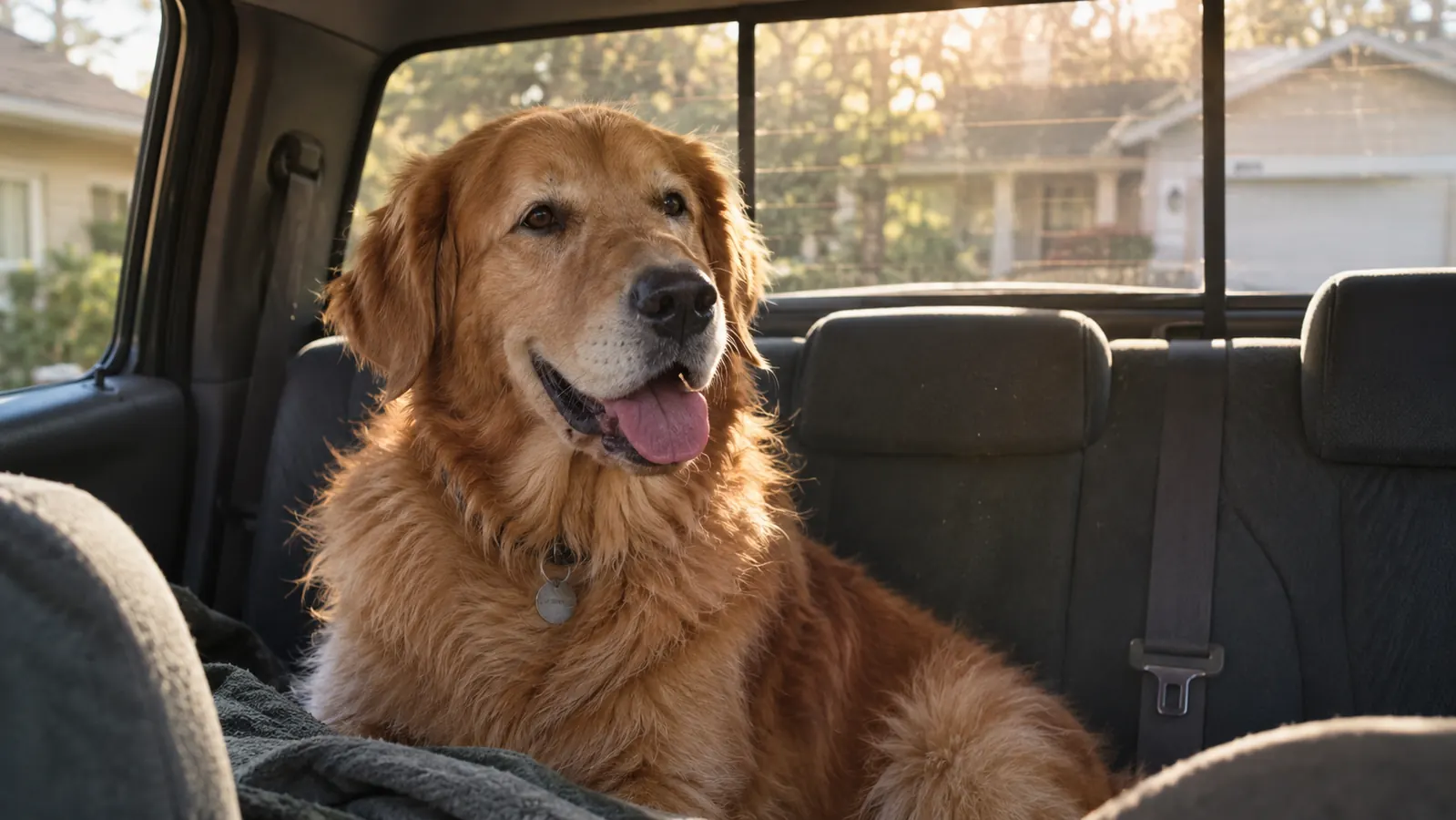
There is a particular kind of shame in opening your truck door for a friend and watching them look at the back seat, then look at you, then decide not to say anything. That was my truck for about a year. I am 61, medically retired, and I live outside Greenville, South Carolina, with a 6-year-old boxer mix named Gunner. He weighs about 68 pounds and he sheds twelve months a year like it is his job. Every errand ended the same way: a fine coat of short hair woven into the fabric, and me standing there with a lint roller that gave up after two passes.
I tried the cheap routes first. A bath towel, which slid off the seat the moment Gunner turned around. A throw blanket, which bunched into a pile he immediately stood on. A vacuum at the car wash that mostly just flattened the hair and left it there. What finally worked was a proper barrier between the dog and the upholstery, plus a small routine I could do in under three minutes. The barrier in my truck is the Active Pets dog car seat cover, a 600D Oxford waterproof hammock, and it is the reason I stopped dreading the back seat. Here is the whole system, step by step, in the order I actually do it.
The cover that ended my lint roller era
600D Oxford fabric, waterproof, universal fit for the back seat. It catches the hair so the upholstery does not have to.
Amazon Check Today's Price on Amazon →Step 1: Vacuum the bare seat once, properly, before anything goes down
This sounds like the step you skip. Do not skip it. A cover traps hair between itself and the seat, and if you install it over a seat that is already loaded with hair, you have built a hair sandwich and pressed it into the fabric under a dog's body weight for the next six months.
Short, stiff hair is the worst offender and it behaves differently than long hair. Long hair sits in clumps you can pick up with your fingers. Short boxer hair works its way into a woven fabric like a splinter, and once it is in there, no vacuum on earth pulls it back out through the surface. That is why the cheap covers never solved anything for me. The hair was not sitting on the cover, it was inside the cover, and every time Gunner lay down he pushed it deeper.
Take twenty minutes on a dry afternoon. I did mine on a Saturday in March, temperature around 70, both rear doors open, floor mats pulled out and leaned against the fence. I used a shop vacuum with the narrow crevice tool, working in short overlapping strokes rather than scrubbing at single spots. The worst of it was in the seam where the backrest meets the cushion. I ran the tool down that seam slowly, twice, on both sides, and it pulled out a grey mat of hair I could not believe had been living there. When I thought I was done I ran my palm flat across the bench. It came up furry, so I went back over the whole seat a second time.
One proper pass is enough. You are not chasing showroom condition, just stopping the buildup at the starting line. After that, the cover does the work and you will not need to vacuum the upholstery again for a long while. I have not touched mine with a vacuum since, and that was well over a year ago.
Step 2: Fit the hammock so it is taut, not draped
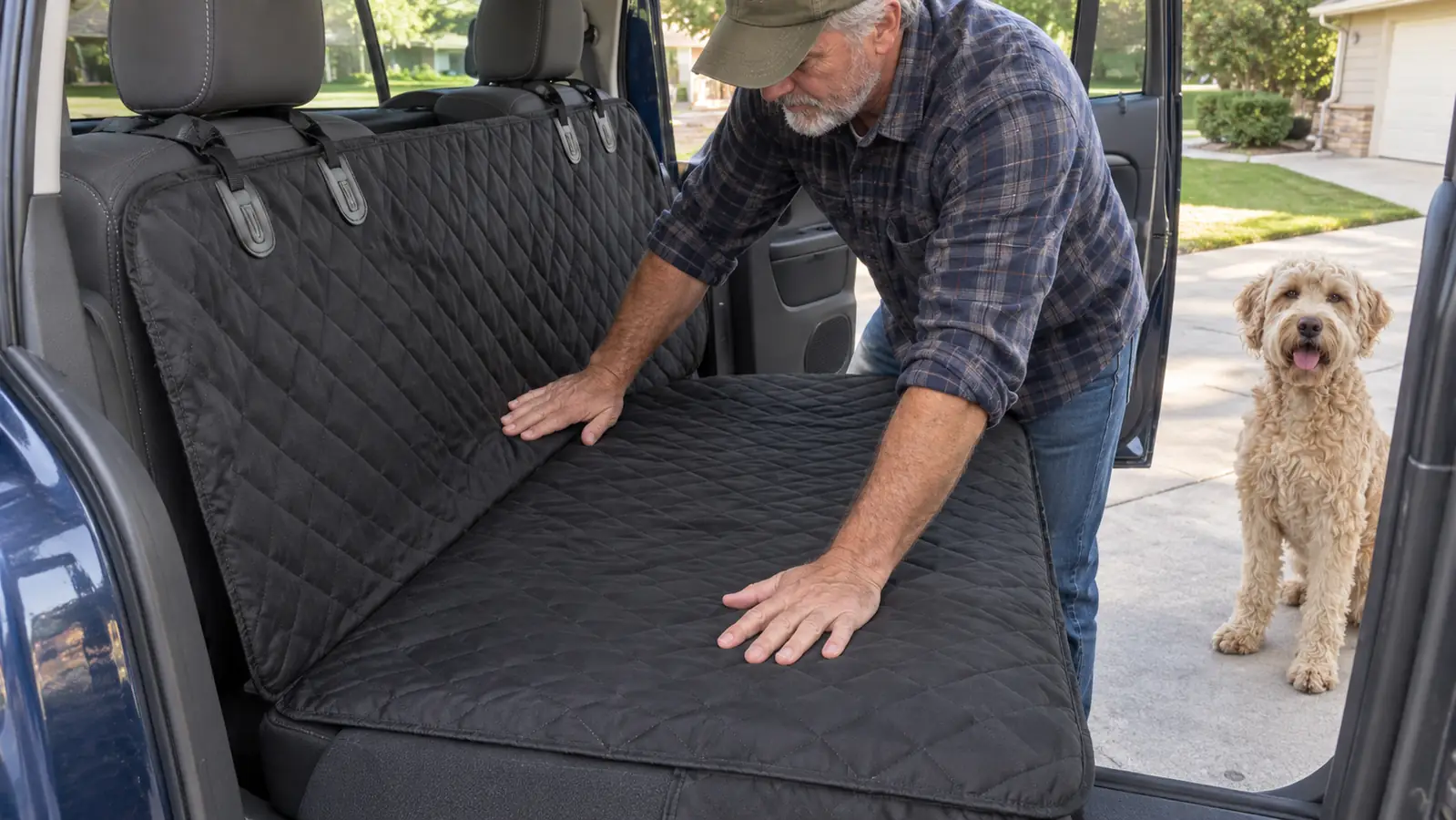
A cover that hangs loose is a cover that collects hair in folds and lets it spill off the edges the moment the dog shifts his weight. The Active Pets cover is a universal fit, and the difference between a sloppy install and a tight one is entirely in the straps.
Start with the two headrest straps at the back and get them snug around the headrest posts before you touch anything else. That ordering matters. If you tension the front first, the rear straps end up carrying the load and the panel develops a wrinkle down the middle that never comes out. Then attach the front straps around the front headrests and pull until the fabric lies flat across the bench. The panel sits at the rear position, covering the back seat, and when it is tensioned properly it stays put instead of sliding forward every time the dog steps on it.
Give it the palm test when you are done. Press down hard in the center and along each edge. If the fabric lifts away from the seat by more than a finger width, tighten the nearest strap a notch. This is the most important two minutes in the whole routine and it is the step people rush. I rushed it the first time, and I spent a week re-hanging the thing every single morning before I worked out that the rear straps needed the extra inch, not the front ones.
Step 3: Change how the dog gets in
Here is the part nobody tells you. Most of the hair in your vehicle does not come from the dog sitting still. It comes from the dog climbing in, turning around twice, and climbing out. Movement sheds hair. The cover catches what falls, but you can cut the volume at the source by changing the boarding routine.
Teach the dog to wait at the open door until you say go, then step in and settle without a lap around the back seat. Gunner used to do a full circuit before lying down, and that circuit was costing me a handful of hair every trip. A hand flat on the chest and a firm wait, repeated daily for about two weeks, turned it into a straight walk-on. He now gets in, circles once, and lies down. It also saved my back, because I stopped having to lean across the bench to untangle him from the far side.
The other half of this step is the exit. Do not let the dog launch out over the cover and onto the driveway in one leap. A dog that leaps pushes off with the back paws and sprays loose hair across the panel and out the door. A dog that steps down leaves nearly all of it on the fabric where you can deal with it in Step 5. I put a hand under Gunner's chest and walk him down. It takes four seconds, and it is the difference between a tidy truck and a driveway full of hair.
Step 4: Keep one tool in the truck and use it before you drive off
The reason hair becomes a permanent problem is time and pressure. Hair sitting loose on a woven fabric is easy. Hair pressed in by a dog lying on it for an hour, then baked by afternoon sun through the rear window, is a different job entirely. So the goal is to remove it while it is still loose.
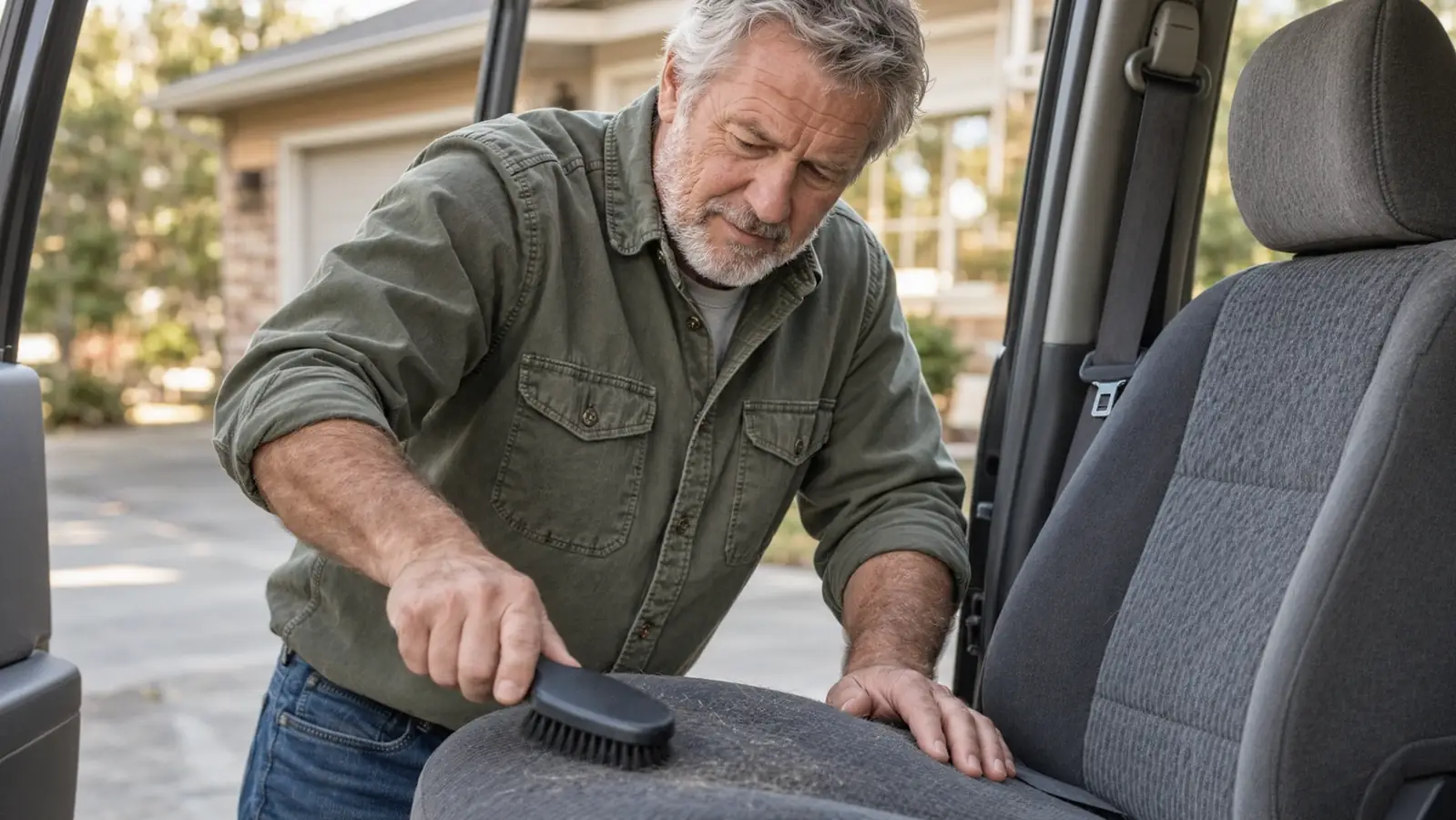
I wasted money on three tools before I landed on the right one. A sticky lint roller was spent after two passes and left adhesive residue on the fabric. Packing tape worked about as well and looked ridiculous. A stiff nylon brush moved the hair around the panel without ever picking it up. The rubber brush was the fourth try and the only one that finished the job, because the nubs grip the hair instead of pushing it.
I keep that rubber pet brush in the door pocket now. Ten seconds across the panel before I put the truck in gear lifts most of what Gunner left behind. The nubs gather the hair into a roll and you can peel the whole thing off in one piece and drop it in the trash. No spray, no wet wipe, no chemical smell sitting in a closed cab in July.
Do this every trip and it never becomes a project. Skip it for a month and you are back to scrubbing. The 600D Oxford fabric on this Active Pets cover helps here, because it is a tight woven surface rather than a deep pile, so hair sits on top instead of working down into the fibers. That is the practical difference between this and the fleece-style covers I tried first.
Hair that sits on top of a fabric is easy. Hair pressed in by a dog lying on it for an hour, then baked by afternoon sun, is a different job entirely. Deal with it while it is still loose.
Step 5: Clean the cover itself on a schedule, not on a crisis
The cover is doing the ugly work, so it needs a wash now and then. I pull mine out on the first Saturday of the month, shake it hard over the fence, and hose it down flat on the driveway. The material is waterproof, so water and a little mild soap run off rather than soaking through, and it dries in about an hour of South Carolina sun.
I learned the dryer lesson the hard way with a different cover years ago. Twenty minutes on high and the backing went stiff and started to crack along the fold lines. Now I hang mine over the fence rail and let the sun do it, which takes about an hour here in July and closer to two in January. If you are in a hurry, a towel laid over it and pressed flat pulls most of the water out.
Two things to get right. Check the care instructions on the listing before you put it in a machine, because a waterproof backing and a hot dryer are not friends. And do not wash it and immediately reinstall it damp. A damp cover pressed against a seat for a week is how you get a smell you cannot locate.
While the cover is out, that is your window to wipe down the upholstery underneath if anything got past the edges. Mine has stayed dry through a wet dog, a spilled water bowl, and one unfortunate incident with a half-eaten fast food bag, so this step is usually a half-minute formality rather than a cleaning job.
What Else Helps
Two smaller habits cut the workload further. Brush the dog outdoors before a long drive rather than after. Five minutes with a shedding blade on the back porch removes hair that would otherwise end up on the cover, and Gunner has decided he enjoys it, which is more than I can say for the vacuum. And keep a folded towel in the truck for wet days. The cover is waterproof, but a soaked dog still tracks water onto the door panel and the sill on the way in, and a towel at the door catches that.
If your dog drools or gets carsick, a small absorbent pad in the low spot of the hammock saves you a wash cycle. If you carry groceries or tools back there, lift the front edge of the hammock and lay the cargo flat on the seat instead of stacking it on the fabric, which presses dirt in the same way a dog does.
One more habit that costs nothing: park with the rear window shaded when you can. A cover that has been sitting in direct sun all afternoon holds heat, and a hot surface is where loose hair binds on hardest. I back the truck under the carport at home and pick the shade tree at the ball field. Small thing, but I notice it on the brush.
None of this is complicated. It is the difference between a truck you can offer someone a ride in and a truck you apologize for. The cover is the barrier. The routine is what keeps the barrier working. Both matter, and the routine costs about three minutes a trip.
One honest caveat, because I would want it. This is a universal fit, which means it fits well rather than perfectly. On my bench it took a couple of tries to find the strap tension that keeps the panel flat, and the side flaps do not hug the seat edges as tightly as a custom-cut cover would. It is a fair trade for something that goes in and out without tools and covers the back seat in the rear position the way it should.
Three minutes a trip beats an hour with a vacuum
Waterproof 600D Oxford, universal fit, a wash routine that takes one sunny hour. Put the barrier down and stop fighting the upholstery.
Amazon Check Today's Price on Amazon →