
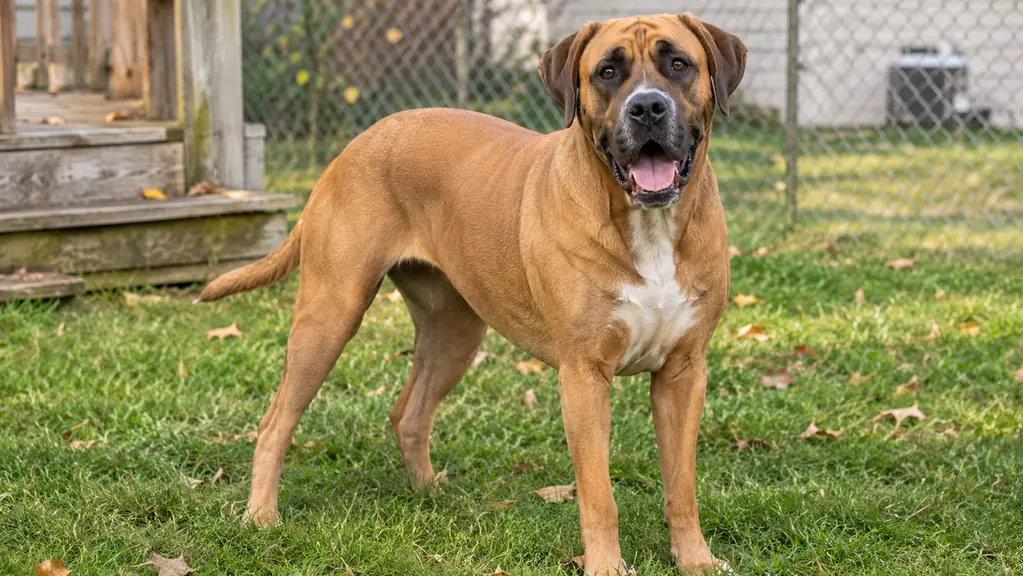
My wife's black slacks told me before I did. I sat down on the couch on a Tuesday afternoon, stood back up, and walked into the kitchen wearing a fair portion of Gunner. He is a 6-year-old boxer mix, 68 pounds, high energy, and he sheds twelve months a year like it is a scheduled event. People assume a short coat means the hair stays put. It does not. Short hair works its way into upholstery, into floor mats, and into the seam of a pickup truck seat like it was engineered for the job.
I bought the FURminator Large Dog Undercoat deShedding Tool for Short Hair after about the fourth week of vacuuming twice a day and still finding hair on the kitchen counter. I have now used it across most of a year, through a hot summer and a cold spell in February, on a dog who has a little stiffness in his back hips on cold mornings. What follows is the honest ledger. The tool earns its place, and there are still things about it I do not care for.
One thing up front, because it saves you reading the rest if it does not apply: this is the short hair model, and it is sized for dogs over 50 pounds. Both of those details decide whether it is the right purchase far more than anything else in this review.
The Quick Verdict
Cuts the loose hair on my floor and couch by more than half with one weekly session. Not a substitute for a vet on skin trouble, and easy to overuse if you are in a hurry.
Amazon Check Today's Price →The six minutes that ended my twice-a-day vacuuming
One pass with the FURminator lifts the loose undercoat that a vacuum can only chase around the room. On a 68 pound dog it takes me about six minutes.
Amazon Check Today's Price on Amazon →How I've Used It
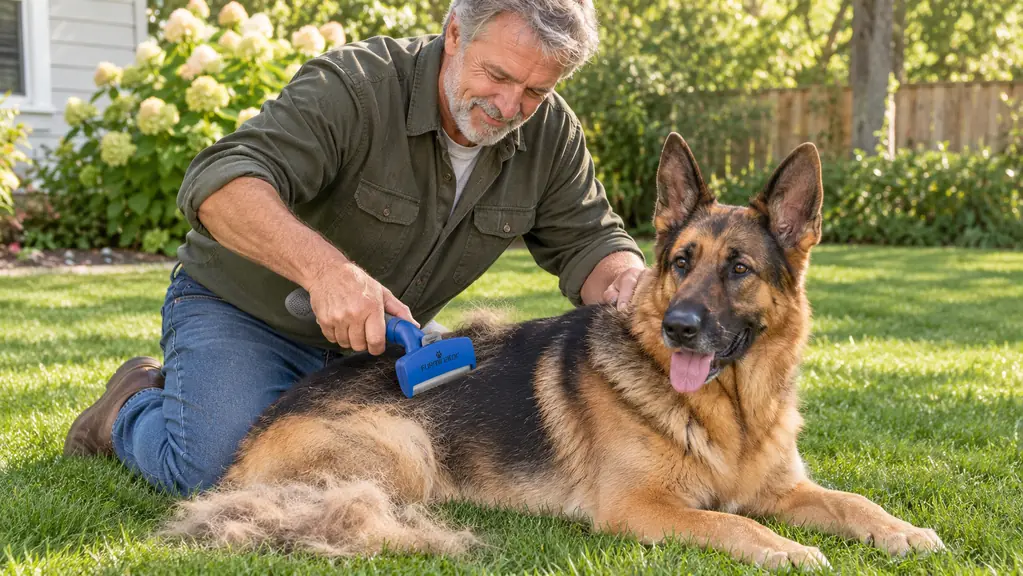
Gunner gets a full session on Sunday morning and a shorter one on Wednesday if the weather has kept him inside. I take him out to the fenced back yard, leave him standing on the grass, and work in sections. Back first, then the flanks, then the rump, then the chest. I skip the legs, the face and the paws entirely, because the head is too wide for those places and I am not interested in testing my luck near an eye. He tolerates it for six or seven minutes and then walks off to the water bowl. That is my signal to stop, and I stop.
The first session produced a pile of hair roughly the size of a second dog. I want to be straight about that, because it is the thing everyone talks about and it sets an expectation the tool cannot keep meeting. The pile gets smaller fast. By the fourth week the sessions were producing maybe a third of what the first one did, and the floor stayed clean for days instead of hours. If you buy this expecting a fresh mountain of hair every Sunday, you will decide it stopped working. It did not. It caught up.
The part that actually matters is the setup, not the grooming. Dry coat, outside, bag within reach. Wet hair clumps and the blade skips over it. Doing this in the living room means every pass throws a cloud of fine hair into the air and you will be finding it on the lampshade in September. Ten seconds of planning buys you a clean house.
I also learned to keep the strokes long and flat rather than short and jabby. Long strokes down the back, overlapping slightly, blade held flat against the body. Short jabbing strokes get you nothing extra and they make the dog look over his shoulder at you, which is a dog's polite way of saying you are being annoying.
What the Tool Actually Does
The FURminator is not a brush in the way a slicker is a brush. It has a stainless steel blade set into the head, a metal handle, and it weighs 7.84 ounces. That last number sounds like a spec sheet detail until you are bent over on the grass for the fourth minute. Seven and three quarter ounces is light enough that my hand does not cramp up before the dog quits on me. The head measures about 6.5 inches across and the tool stands 8.75 inches tall, with the whole footprint listed at 2 by 6.5 by 8.75 inches.
The stated job is reaching through the topcoat to pull the loose undercoat hair without cutting the skin or damaging the topcoat when it is used as directed. I can only report what I saw across roughly fifty sessions: no nicks, no bald patches, no change in the look of his coat other than less of it coming off on my sleeve. Used flat and with light pressure, the blade glides. Tipped up on an edge, it drags. The tool tells you which one you are doing.
The feature I use every single session is the FURejector button. You push it and the collected hair releases from the blade in one clump instead of you picking at it with your fingers. On paper that reads like a marketing line. In practice, halfway through a 68 pound dog with your hand already covered, it is the difference between finishing and quitting.
The 50 pound threshold is worth respecting. Gunner at 68 sits comfortably in the middle of the stated range and one session covers him without a second pass. The same tool on a much bigger dog would work, but you would be making an awful lot of strokes, and in my experience that is when technique slips and pressure creeps up.
The Short-Hair Question
This is the short hair version, and that detail matters more than any other on the label. A boxer mix has a single short coat. The hair sits close to the skin and what undercoat there is runs fine and dense. The short hair blade is built for exactly that. If your dog has a long or heavily feathered coat, this specific model is simply the wrong tool, and FURminator makes a version for that coat instead. Buying the wrong one and leaning on it does not do the dog any favors, and it is the most common way I see people end up disappointed with a tool that is fine.
What surprised me is how much loose hair a short coat holds. I assumed short hair meant less shedding. It means the hair itself is shorter, not that there is less of it. The FURminator pulls it out in a way my slicker never did, because the slicker was mostly rearranging hair on the surface and making it look tidy for an hour.
The real measure showed up in the vacuum canister. Before this tool I emptied it twice a week and it came out full of hair. Now I empty it once and it is mostly grit and grass. My wife noticed the difference before I mentioned it, which in this house is the only review metric that counts.
Where It Falls Short
It has a narrow job and it is easy to overdo. Pressing harder does not extract more hair, it just irritates skin. I learned that in the second week when Gunner turned around, gave me a flat look, and then refused to stand still for the rest of the morning. Since then I use light pressure, I keep to the schedule, and I stop the moment he walks away. We have not had a repeat of that morning.
It also does nothing about mats. If your dog has a matted patch behind an ear or under the collar, this is not the tool. It skips across the mat and pulls at the edges, which cannot feel good. That is a comb job, and if the mat is bad enough, it is a groomer job.
And it is not a bath substitute. It does not clean anything, it does not fix an odor, and it does not replace whatever shampoo schedule your dog is already on. It removes loose hair. That is the whole offer. I still bathe Gunner on his normal schedule and the tool stays in the drawer until he is dry.
One more honest note: it is too wide for the legs, the tail and the face. I still use the slicker for those spots, so this did not replace my grooming bin, it took over the biggest job in it.
What It Replaced in My Grooming Bin
Before this I had a slicker brush, a rubber curry mitt, and a plastic comb that came free with something years ago. The mitt did better on the couch cushions than on the dog. The comb was useless. The slicker is still in the bin because it finishes the coat and handles the legs and face, but it is no longer the first thing I reach for on a Sunday morning.
I looked hard at the deshedding blades that are basically a loop of metal on a handle. They are inexpensive and they do work, and I know people who swear by them. They are also the tool most likely to scrape a dog if your hand is not steady, and my hand is steady right up until it is not. The FURminator's head sits flat and the FURejector button keeps the blade clear, and for a 61 year old with a sore back doing this bent over in the yard, that matters more than the difference in cost.
If you are comparing tools, use this order: coat type first, weight range second, everything else third. Wrong size or wrong coat version and nothing else about the tool can save the purchase. I got both right by accident and I would not count on that twice.
What Changed Around the House
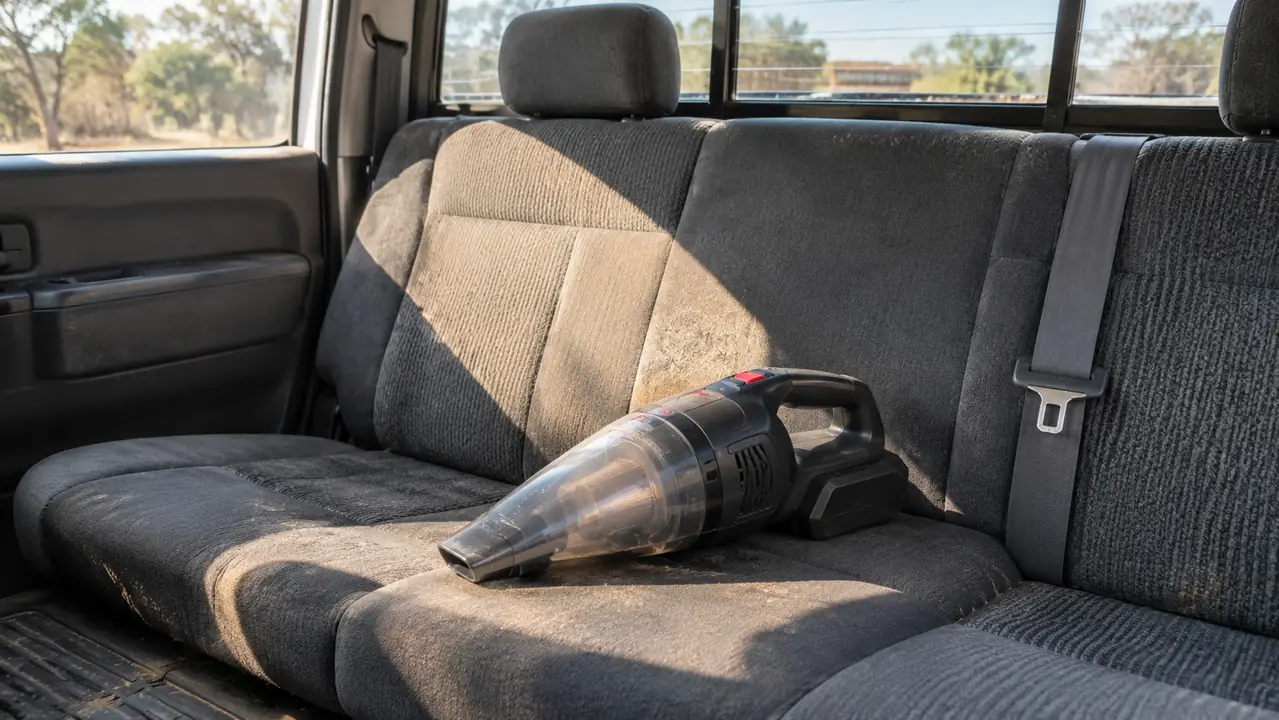
The couch stopped being a problem first, which is what I bought the thing for. The truck took longer. Gunner rides in the back seat and the cloth holds hair the way a sweater holds burrs. After three weekly sessions the seat went from visibly furred to needing a quick pass with a hand vacuum maybe once a month instead of every trip. Same story with the rubber mat in the truck bed and the floor of the golf cart, which I use around the neighborhood and which he insists on riding in.
The other change is smaller and harder to put a number on. Gunner seems less bothered in the heat. A dog carrying a loose winter undercoat in a South Carolina August is a dog who is uncomfortable, and once the loose hair was coming off on a schedule instead of falling out on its own, he spent more of the afternoon stretched out on the porch instead of panting in the shade. That could be the tool, or it could be that we both got better about the routine. Either way I will take it.
What I Liked
- Takes a serious amount of loose hair off a short-coated dog in one weekly session
- Light at 7.84 ounces, so my hand holds up through the whole session
- FURejector button clears the blade in one push instead of picking at it
- Correctly sized and stated for dogs over 50 pounds
- Flat steel blade has not nicked a 68 pound dog in roughly fifty sessions
Where It Falls Short
- Easy to overuse, and heavy pressure irritates the skin
- Does nothing for mats, tangles or odor
- Too wide for legs, tail and face, so a second tool is still required
- Only the right choice for short coats; long coats need the other model
The first session filled a bag with hair the size of a second dog. The floor then stayed clean for four days instead of four hours.
Who This Is For
This is for the owner of a large, short-haired dog who is tired of hair in every room and who wants one tool that does the heavy lifting once a week. If your dog is over 50 pounds, has a short single coat, and will stand still for six or seven minutes in exchange for a biscuit, this does the job and it does it faster than anything else I have tried.
It also suits people who do not want to spend an hour on grooming. I am 61, I have a back that lets me know about it, and I can do this standing on flat grass with the dog beside me rather than lifting him onto a table. Six minutes, a bag, and a water bowl. That is the entire routine, and it is the reason the tool is still in the rotation instead of in the back of a drawer with the comb.
Who Should Skip It
Skip it if your dog has a long coat, a feathered coat, or a coat with heavy furnishings on the legs, because there is a different model for that and this one is not it. Skip it if your dog has skin trouble, a rash, or an open spot, because dragging a steel blade over irritated skin is a poor idea and a vet should have a look before you do anything else. Skip it if your dog will not stand still at all, since a moving dog and a blade are a combination that does not end well for either of you.
And skip it if you want one tool that covers every part of the dog. It does one job well. You will still want a slicker for the legs and face and a comb for anything matted. I kept mine, I use them, and I would buy this again knowing that.
Over 50 pounds and short-coated? This is the one that kept the spot
Eleven thousand reviews and a 4.7 average say other people reached the same conclusion I did. Check the size and coat version against your own dog before you order, because that is the whole decision.
Amazon See Today's Price on the FURminator Listing →