
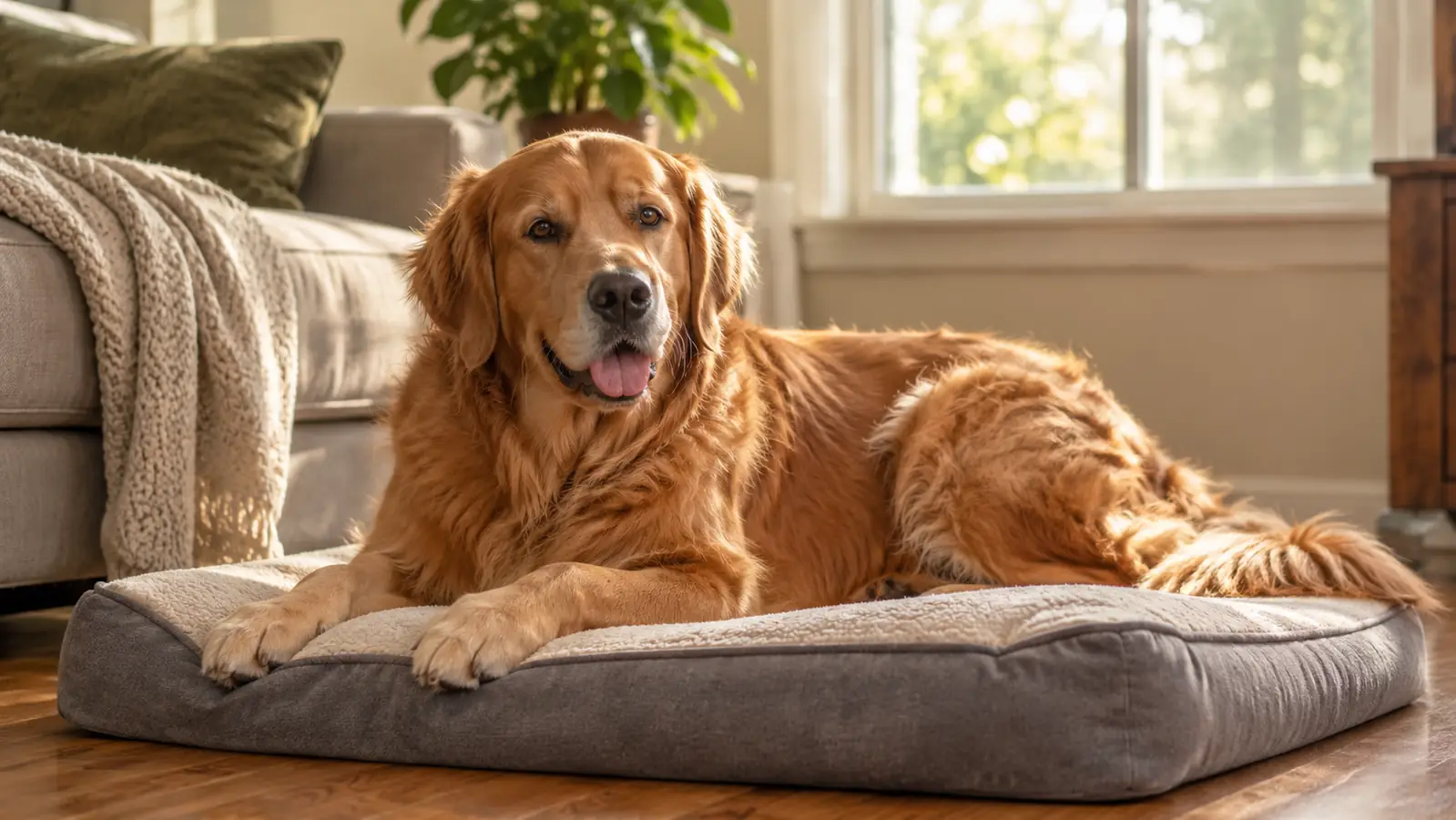
Gunner is a six-year-old boxer mix, about 68 pounds, and for the last two winters he has gotten up off the floor like a man twice his age. Cold mornings are the worst. He takes one step, stops, shifts his weight off the back hips, and then stands there deciding whether the trip to the water bowl is worth the effort. I am 61, medically retired, and I know exactly what that first step feels like, which is probably why I noticed it in him before anyone else did.
I tried the obvious things first, and none of them held. A cheap flat pad that went flat inside a month. A folded blanket on the rug, which he pushed into a pile and ignored. A foam topper I cut to size that slid across the floor every time he stood up. What finally changed his mornings was not a pill and not a gadget. It was giving him real structure under the hips and putting it where he already wanted to lie down. The bed I landed on is the Bedsure orthopedic dog bed, and the useful part is not the brand name on the label. It is the order of the small decisions around it. That is what the five steps below are about.
The Bed Gunner Walks To on Cold Mornings
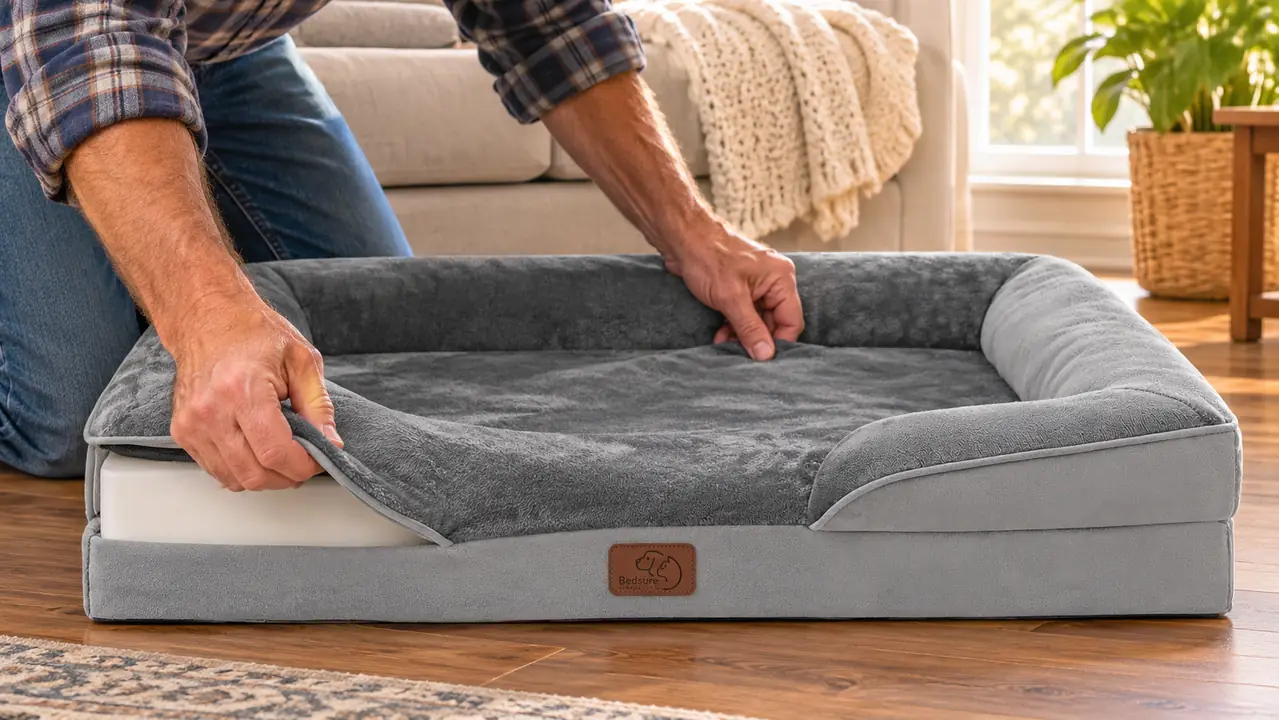
Four-sided bolster to lean against, egg-crate foam under the hips, and a cover that comes off for washing. It will not replace a vet visit, but it is the cheapest working part of the routine below.
Amazon Check Today's Price on Amazon →Five Steps That Changed Our Mornings
Step 1: Measure the Dog and the Floor Before You Order
Sizing is where most people get this wrong, and I include myself in that. Do not size by weight alone. Measure your dog from the base of the tail to the front of the chest while he is standing square, then add about four inches so he can stretch out flat. Gunner tapes at about 32 inches, which puts him in the large, listed at 35 by 25 by 7 inches and 5.34 pounds. A dog that curls up tight can go one size down. A dog that sprawls on his side, the way Gunner does, cannot.
One thing to know before you order, because it confused me for a solid hour. The spec panel on this listing shows a 30 pound maximum weight recommendation, while the same listing's own copy says the nine sizes run from 20 to 52 inches and cover dogs up to 150 pounds. Those two statements do not agree with each other. What I can tell you is that 68 pounds of boxer mix fits the large with room to spare and has not flattened it. Trust the size chart in the product photos, and read it twice before you click.
Then measure the floor, not just the dog. A bed that does not fit the spot you had in mind ends up folded in the garage. I paced off the strip of living room between the sofa and the back door, which is where Gunner already dropped after his walk, and the 35 by 25 footprint slotted in without narrowing the path to the door. That last part matters more than it sounds. A bed that blocks the walking route gets moved by somebody in the house within a week, and then the whole routine restarts.
Step 2: Put It Where He Already Lies Down
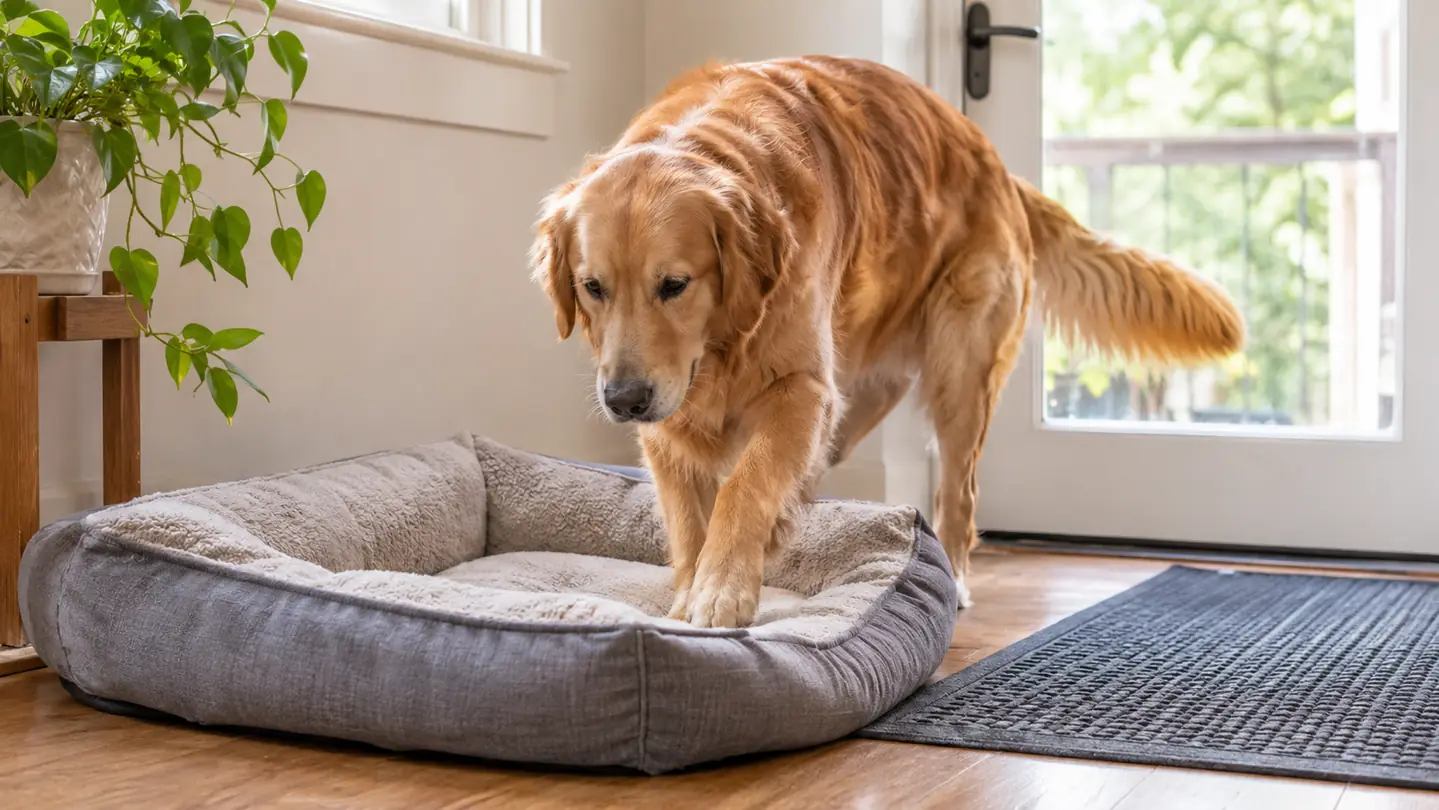
Put the bed where the dog already settles, not where it looks best. For two weeks I had a bed in the corner of the bedroom, because that is where a nice dog bed belongs in a photograph. Gunner never touched it. The day I moved it to the warm strip of floor in front of the back door, he was on it before I finished straightening the bolster.
Dogs pick their spots for reasons that make sense to them: sightlines, drafts, sun patches, and the path the family walks past all day. Watch yours for three days and note the two places he lands most often. Put the bed in one and a folded blanket in the other. Gunner's two are the back door in the morning and the edge of the living room in the evening, and the Bedsure bed has lived in both spots since.
The bolster is the part I did not expect to matter. The Bedsure bed carries a four-sided bolster design, which gives a dog something solid to brace his chin and shoulder against on the way down and to push off on the way up. Gunner uses the low front edge to step in and the taller side to lean on when he rises. If your dog's back hips are weak, that lean point is worth more than extra stuffing in the middle of the cushion.
Step 3: Spend a Week Getting Him Onto It
Getting a dog onto a new bed is not automatic, and it is not a test of his loyalty to you. It is a habit, and habits take about a week to form. The first night I put one of my worn T-shirts on the cover, unwashed, and left two treats in the middle. He came over, took the treats, and left. I counted that as progress.
On day two I fed him beside the bed and moved the bowl a little closer at each meal. On day three I dropped a treat on the foam whenever he walked past, whether he stepped on it or not. By day four he was stepping up on his own, and by the end of that week he was going to it after the morning walk with no help from me at all.
Do not lift him onto it, and do not hold him there. A dog that gets manhandled onto a bed learns that the bed is a place where he loses control, and he will avoid it for months. Let him come to it on his own schedule. The only thing I insisted on was that his evening chew happened on the bed, and that single habit did the rest of the work.
Week one he ignored it. Week two he started going to it on his own after the morning walk. Week six he was getting up off it faster than he gets up off the rug.
Step 4: Build the Ten-Minute Morning Routine
Here is the honest part, and I am not going to dress it up. A bed does not fix a stiff hip. What it does is stop making things worse overnight, and it gives you a warm padded place to run a short routine on. The routine is where I noticed the biggest change, and the bed is what made the routine possible.
Cold mornings start with five minutes on the bed instead of the hardwood. I sit on the floor and run a flat hand along his spine from the shoulders to the tail, then down each back leg with light pressure. He lies still for it now, which he would not do on bare floor. Then he gets up on his own and we go out. That replaced the old sequence, where he scrambled upright on slick boards and limped to the door before I had my boots on.
After that, a slow ten minutes on the flat sidewalk before any real running. Gunner is high energy and would sprint out of the gate if I let him, and a cold muscle asked to sprint is how you get a bad afternoon. The warm-up costs me ten minutes. It saves him the rest of the day. If your dog is worse than just stiff, if he is favoring a leg, yelping when he rises, or losing his footing, that is a vet visit and not a bed purchase, and no amount of shopping changes it.
Step 5: Keep the Foam Working
The cover comes off, and it should come off often. The listing calls the cover removable and waterproof, and both of those matter with a dog that sheds year round and occasionally has an accident. I strip it every other Sunday, shake it out in the yard, and wash it on cold. That waterproof layer is the reason a small mess does not reach the foam and stay there.
The real maintenance issue is the foam itself. Orthopedic egg-crate foam is only orthopedic while it still has height. Once a month, press your palm into the spot where your dog's hips sit. If your hand sinks to the floor with no push-back, the bed is finished for that dog, no matter how good the cover still looks. Gunner's first cheap pad compressed inside six weeks. This one still has resistance at the hip end after months of daily use, though the front edge where he steps in has softened noticeably.
Rotate it while you are down there. Once a month I flip the foam and turn the whole Bedsure bed end for end so his hips are not hitting the same compressed spot every night. It takes thirty seconds. It also roughly doubles the useful life of the foam, which is the part that costs you money to replace. Check the seams where the bolster meets the base while you are at it, because that is where a dog who leans hard will open a gap first.
What Else Helps
Two things helped almost as much as the bed, and neither one cost much. The first is traction. I put a rubber-backed runner over the hardwood between the bed and the back door, and Gunner stopped doing the splits on his way out. A slick floor is harder on a stiff hip than a hard bed is, because the dog has to catch himself with every step. If your house is mostly tile or hardwood, walk the dog's main route and put something with grip on the worst three feet of it.
The second is weight and nails. Every extra pound on a dog with hip stiffness is a pound he carries up out of a lie-down, and Gunner was 72 pounds last spring and is 68 now. The difference shows in how he rises. Nails trimmed short also keep him from slipping on the floor, and that is a two-minute job once a month with the right clippers. Beyond that, keep the Bedsure bed out of the draft from the door in winter and let him have the sunny spot in the afternoon. Warm beats cold for a stiff joint every single time.
None of this is complicated, and none of it is fast. A bed, a rug, a trimmed nail, ten minutes of walking before the running, and a habit built over one week. That is the whole program. Gunner still has stiff mornings when the temperature drops into the thirties, and I still notice them. But he gets up on the first try now instead of the third, and he goes to the bed on his own instead of waiting to be coaxed. For a 61-year-old with a bad back and a dog with bad hips, that is a good trade.
Buy the Bed Once, Then Run the Routine
Measure your dog nose to tail and measure the floor spot before you order, then pick the size from the chart in the listing photos. Orthopedic egg-crate foam, a four-sided bolster, and a removable waterproof cover you can actually wash.
Amazon Check Today's Price on Amazon →